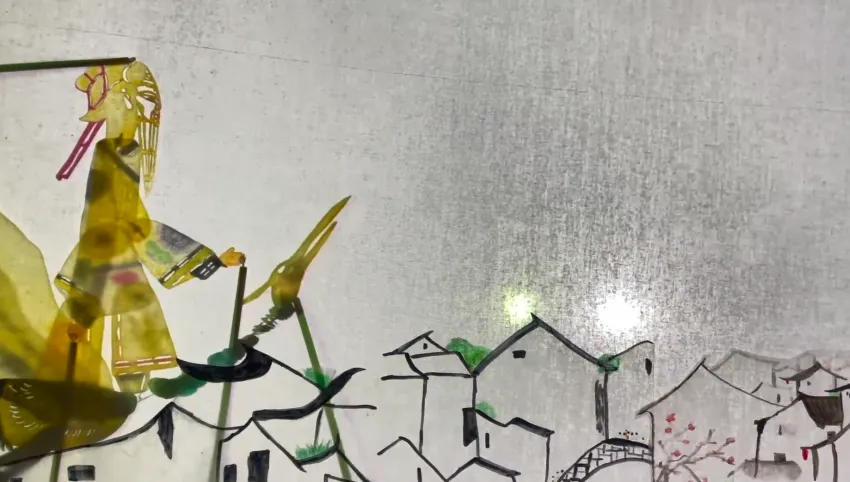
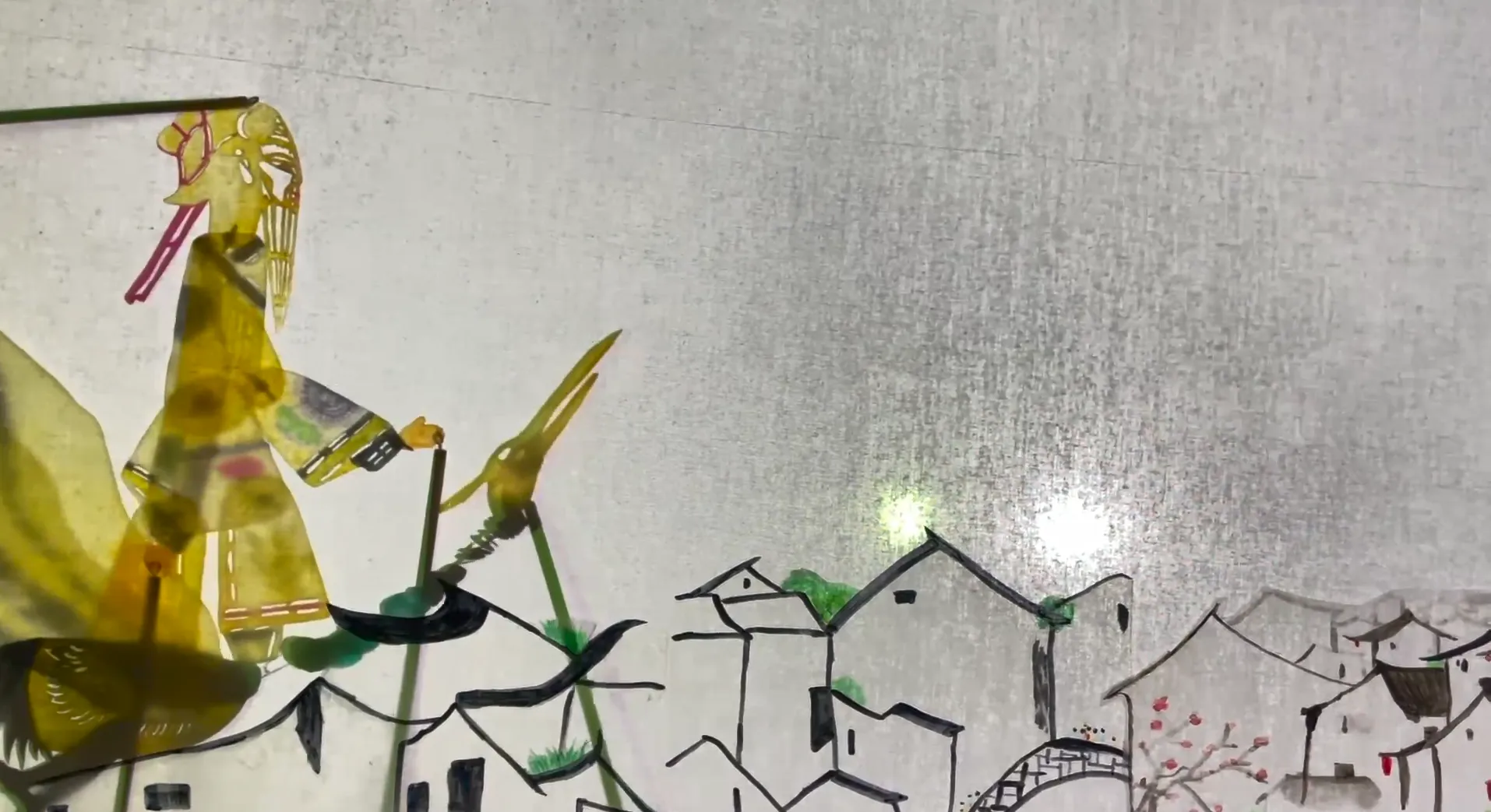
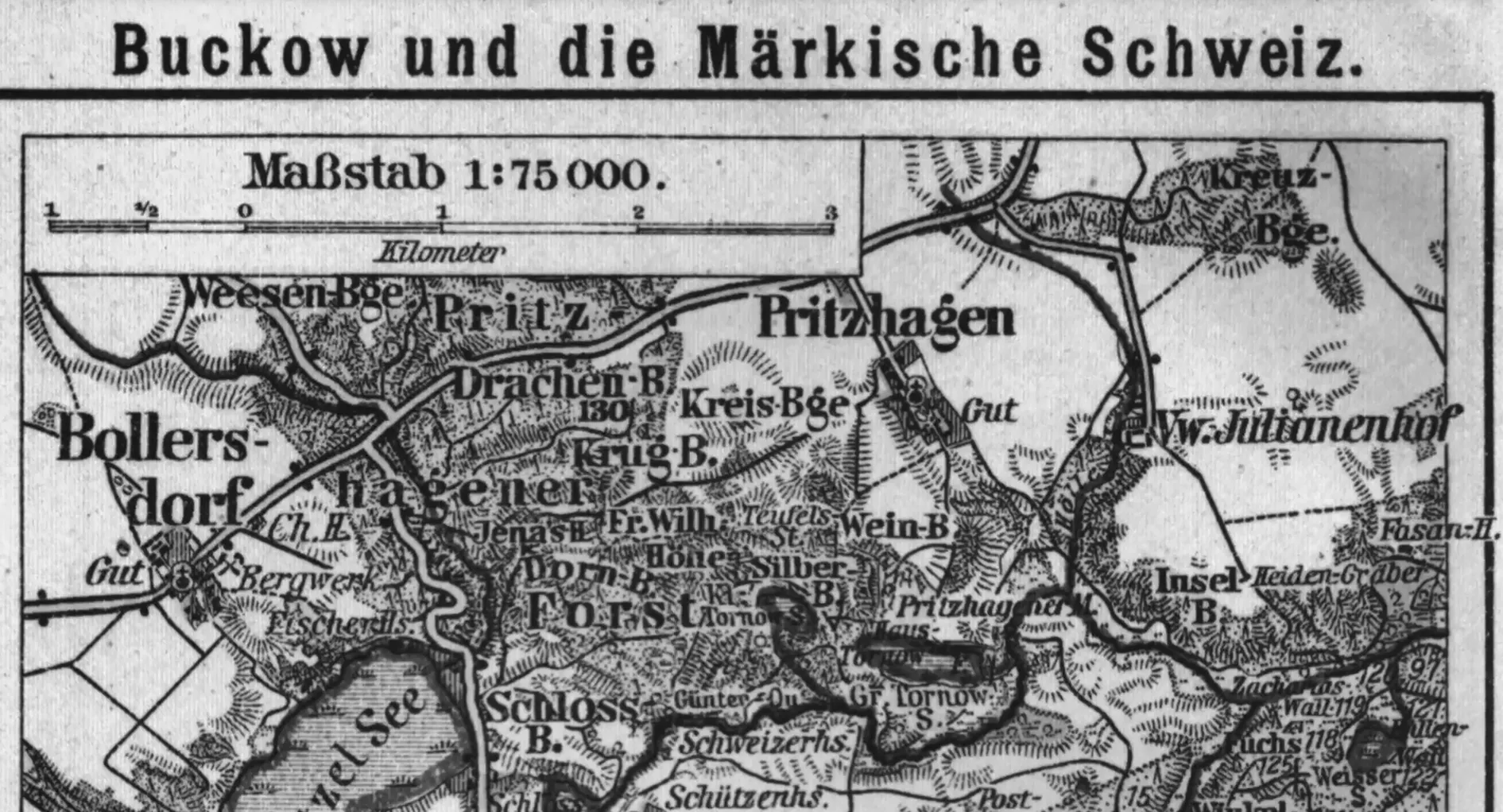


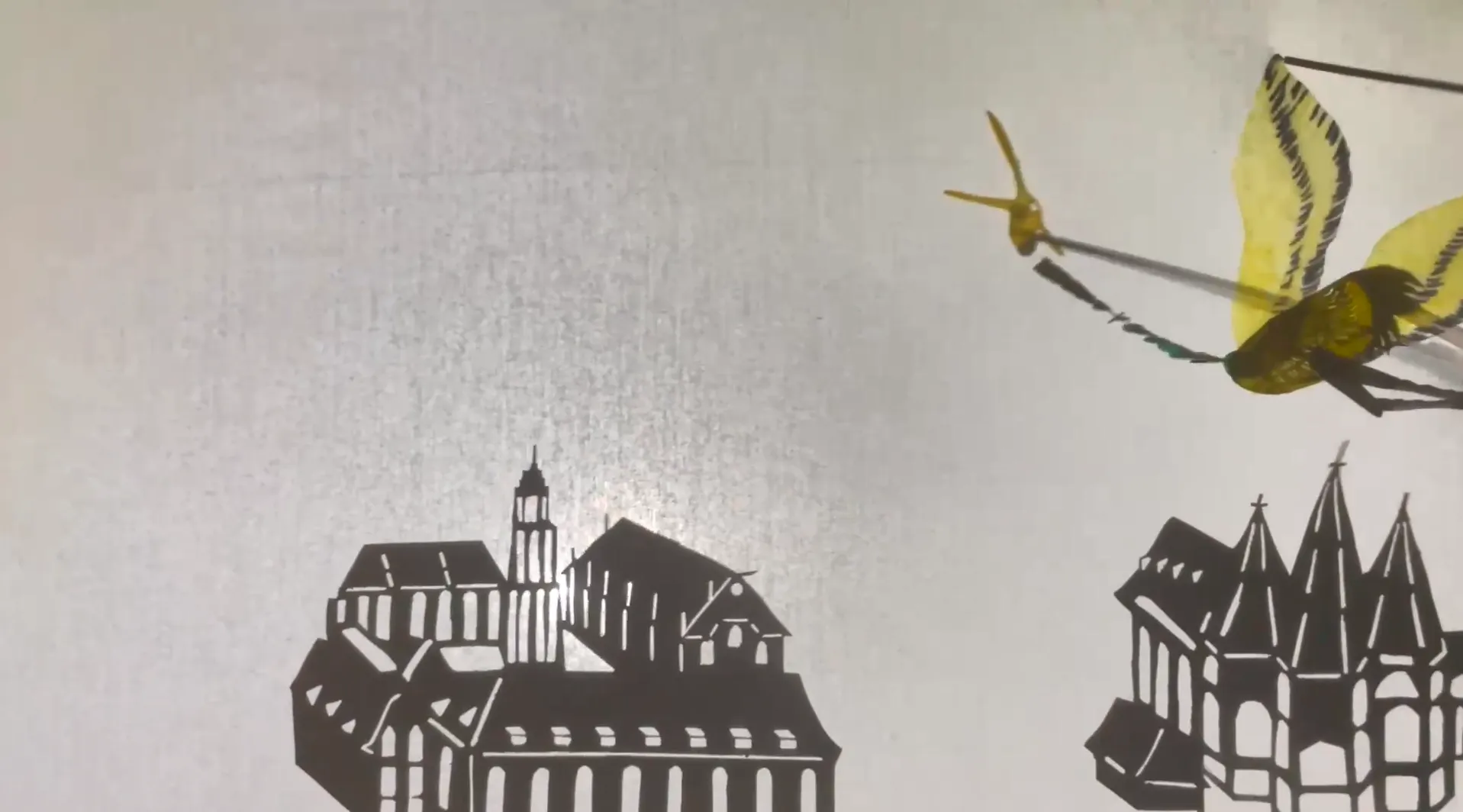
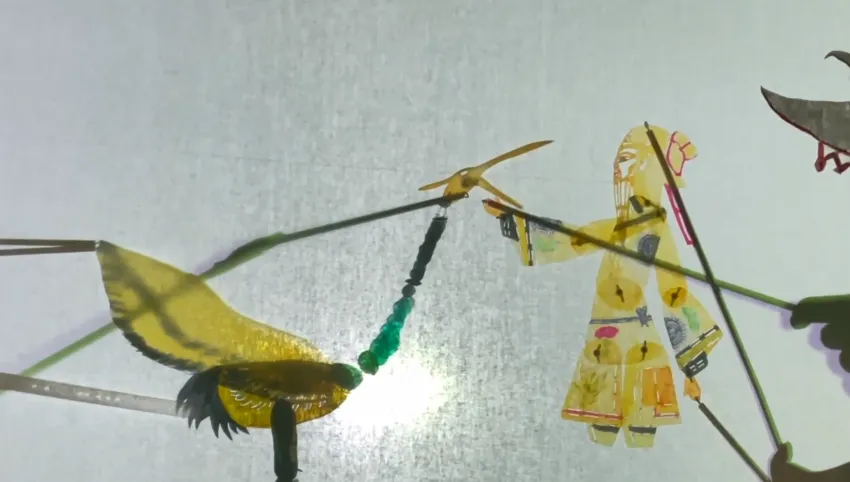
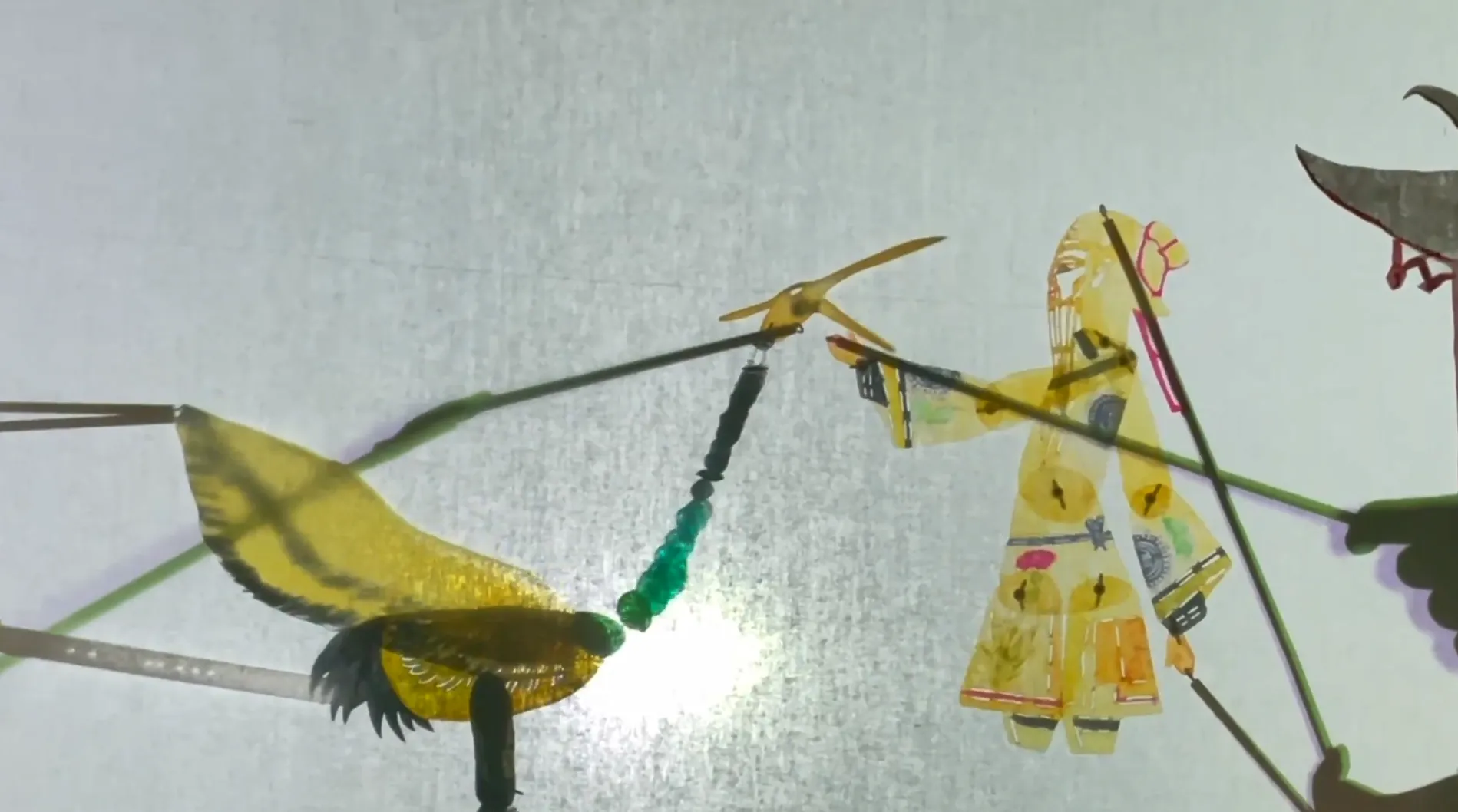
Once upon a time in Buckow: a cloud enveloped Brecht, and when it dissipated, Brecht had become a large bird. This big bird flies through the wafts of mist and meets Bai Juyi in the imperial city. Together they swim through the deep, black pools of ink, through layers of clouds and shadows and recite poems together in late spring. Finally, the big bird turns back into Brecht and returns to Buckow.
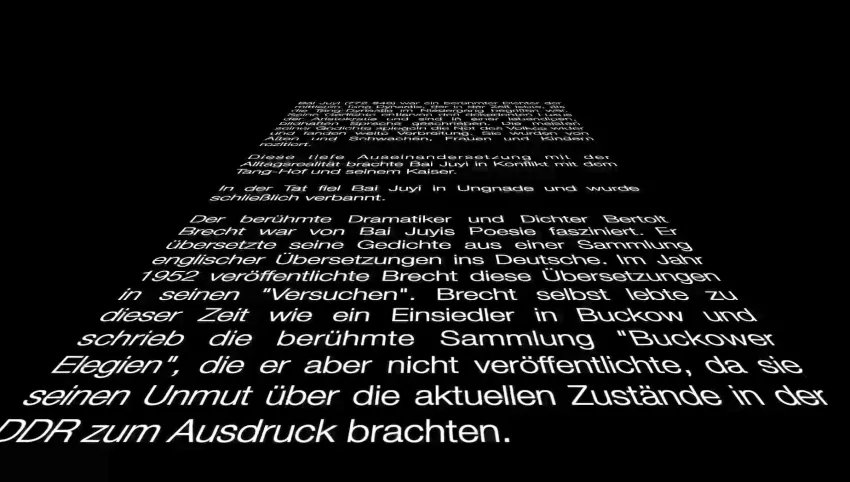
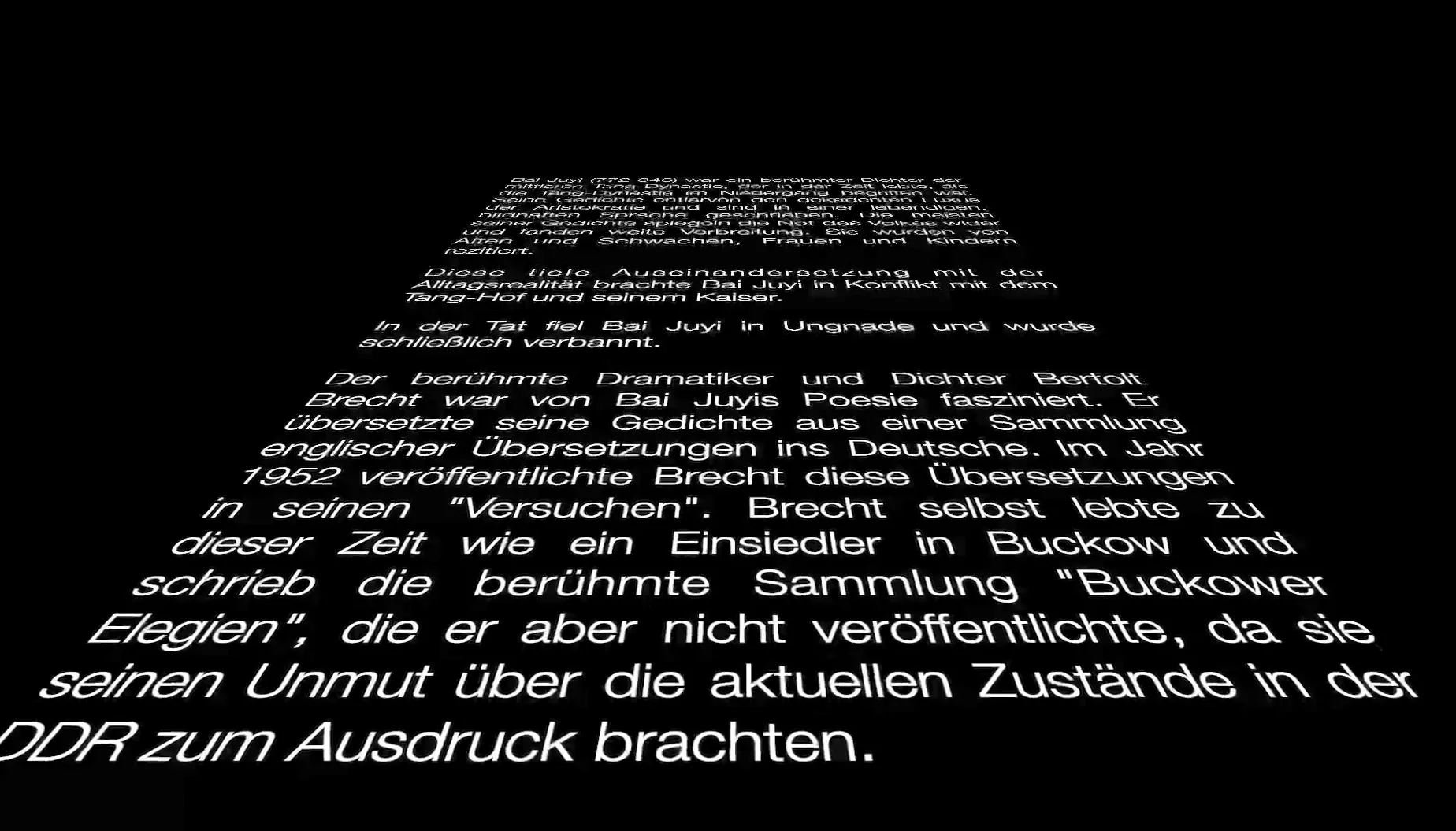
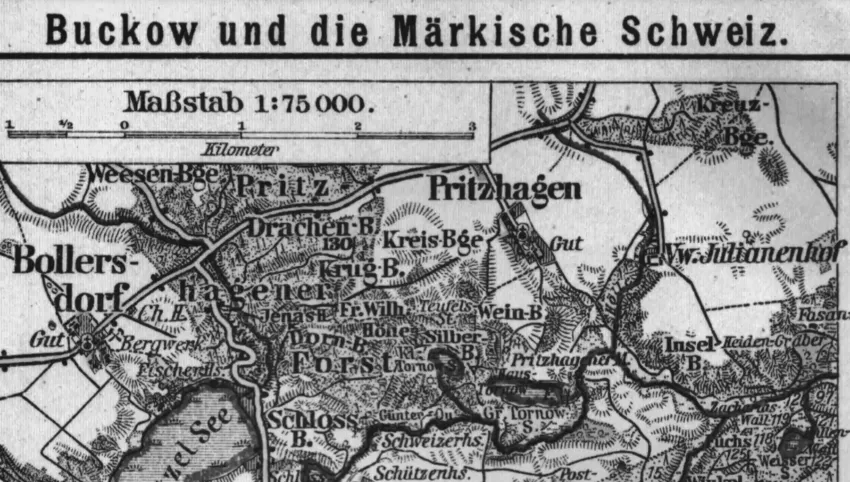
Bai Juyi (772-846) was a famous poet of the middle Tang dynasty, who lived at the time when the Tang dynasty was in decline. His poems exposed the decadent luxury of the aristocracy and reflected the plight of the people. This deep engagement with everyday reality brought Bai Juyi into conflict with the Tang court and its emperor. In fact, Bai Juyi fell out of favor and was eventually banished. Brecht translated his poems from a collection of English translations of Tang poems into German. In 1952, Brecht published these translations in his "Attempts". Brecht himself lived like a recluse in Buckow at this time.
B. solo B. explores the question of what exile is. Is exile merely a material change in time and space? Or is it a change of the human spirit? The answer can be found by listening to Brecht's dialog with Bai Juyi's poems.
by Yi Dian, Wu Anqi, Li Ruobing, Shen Wenjing, Qu Xueyu, Chen Ziying
Text rights:
Suhrkamp Publishing House / Brecht Heirs
Recording and streaming as part of BRECHT DIGITAL. Supported within the framework of "dive in. Program for digital interactions" of the German Federal Cultural Foundation, funded by the Federal Government Commissioner for Culture and the Media (BKM) in the NEUSTART KULTUR program."
Bai Juyi (772-846) was a famous poet of the middle Tang dynasty, who lived at the time when the Tang dynasty was in decline. His poems exposed the decadent luxury of the aristocracy and reflected the plight of the people. This deep engagement with everyday reality brought Bai Juyi into conflict with the Tang court and its emperor. In fact, Bai Juyi fell out of favor and was eventually banished. Brecht translated his poems from a collection of English translations of Tang poems into German. In 1952, Brecht published these translations in his "Attempts". Brecht himself lived like a recluse in Buckow at this time.
B. solo B. explores the question of what exile is. Is exile merely a material change in time and space? Or is it a change of the human spirit? The answer can be found by listening to Brecht's dialog with Bai Juyi's poems.
by Yi Dian, Wu Anqi, Li Ruobing, Shen Wenjing, Qu Xueyu, Chen Ziying
Text rights:
Suhrkamp Publishing House / Brecht Heirs
Recording and streaming as part of BRECHT DIGITAL. Supported within the framework of "dive in. Program for digital interactions" of the German Federal Cultural Foundation, funded by the Federal Government Commissioner for Culture and the Media (BKM) in the NEUSTART KULTUR program."
from
Curator
State Textile and Industrial Museum (tim)