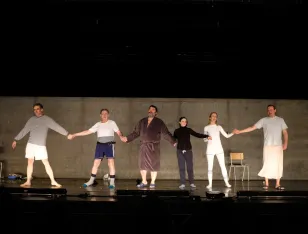
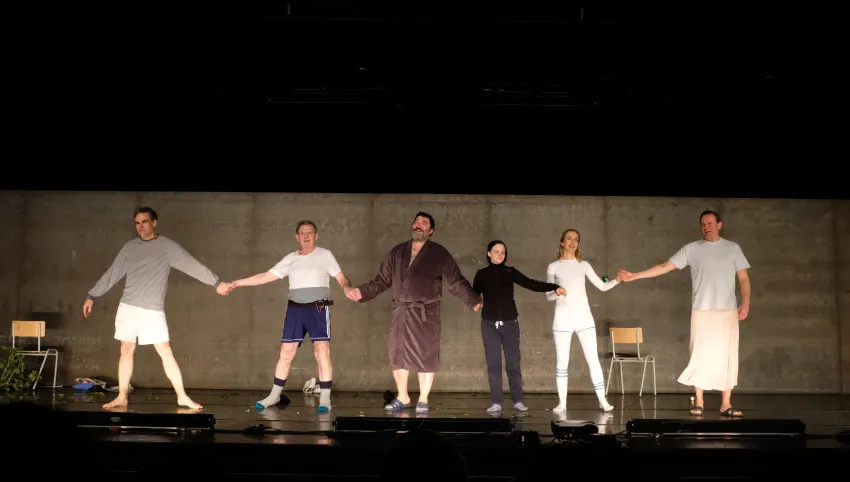
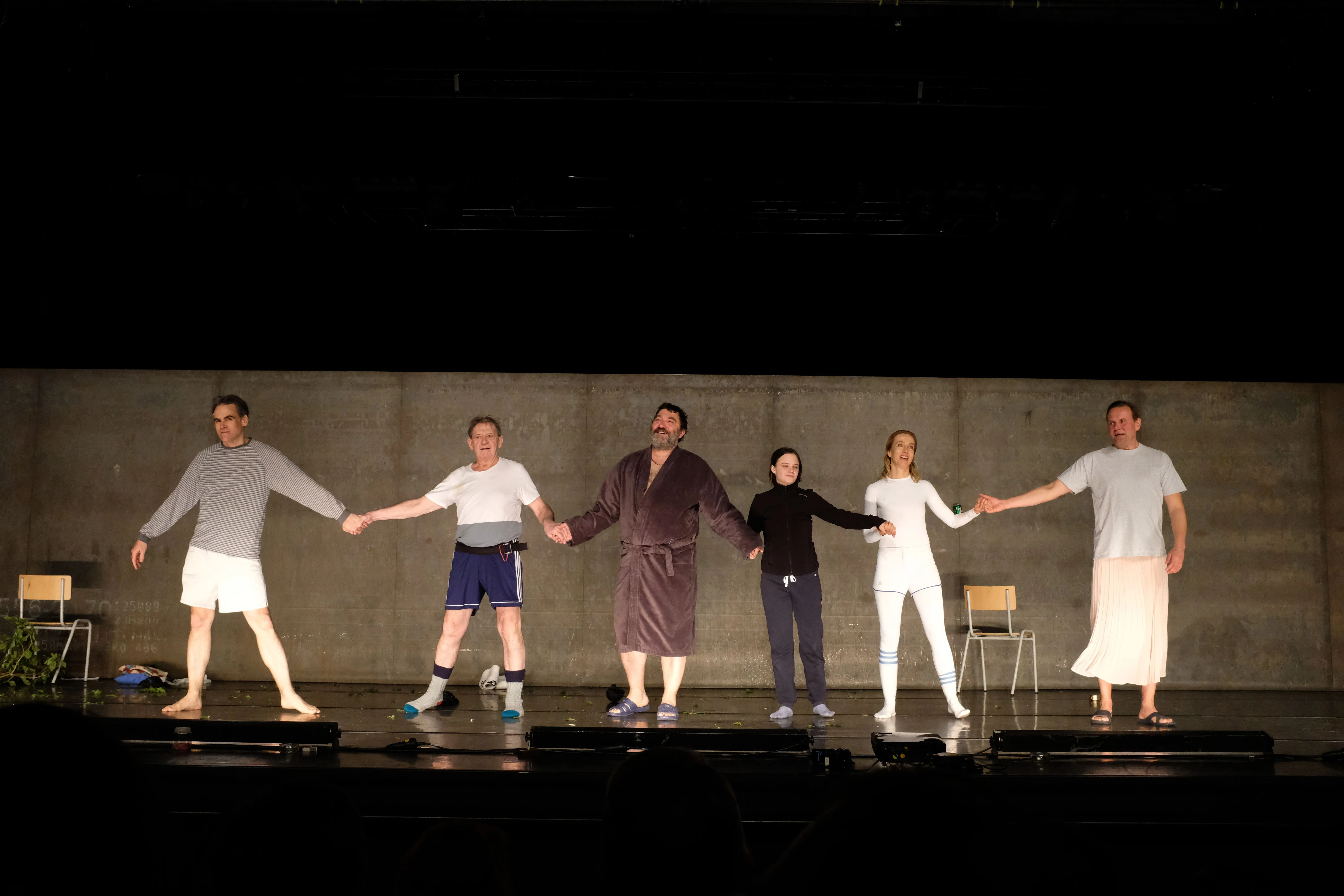


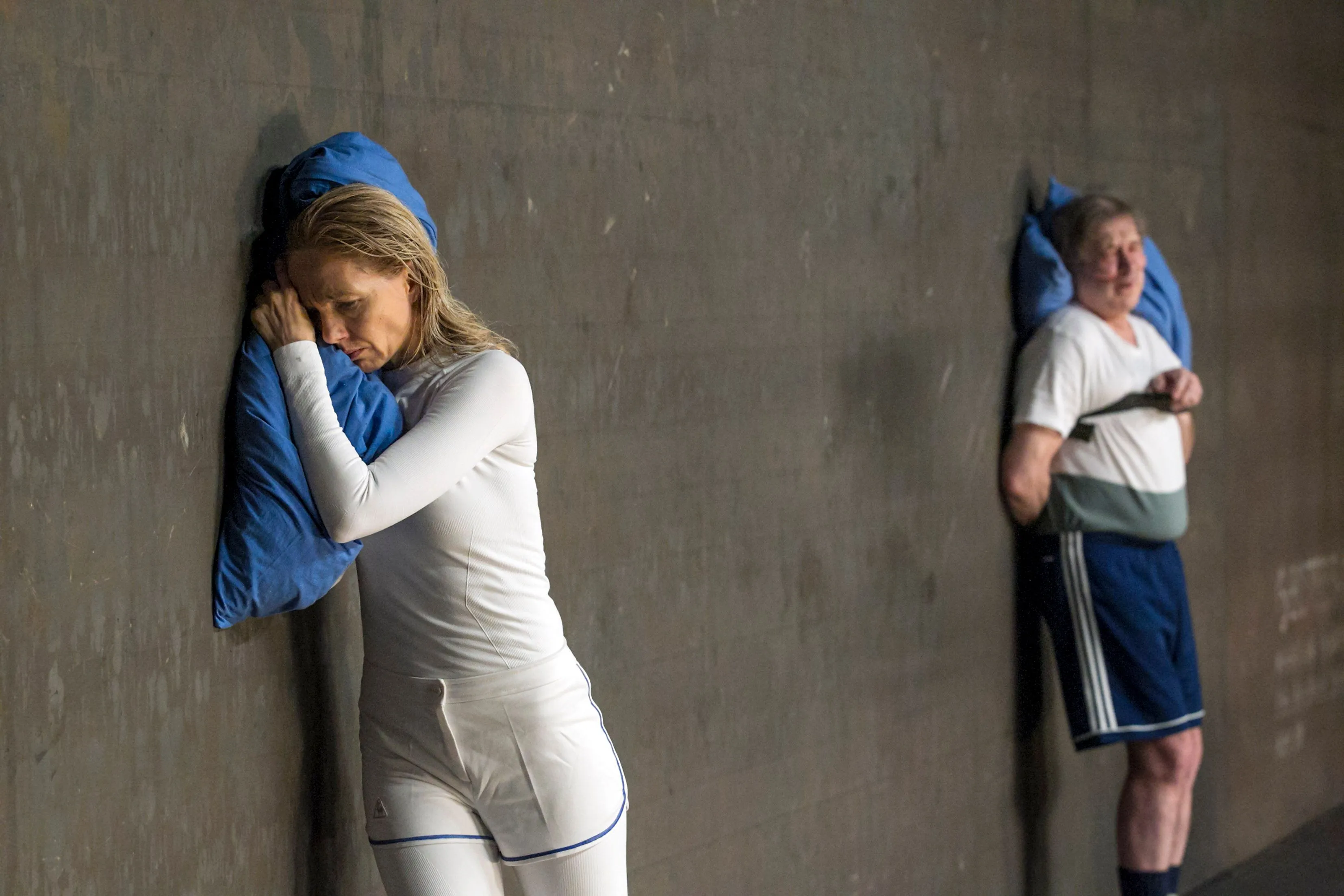
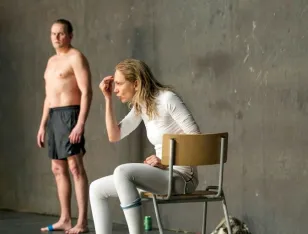

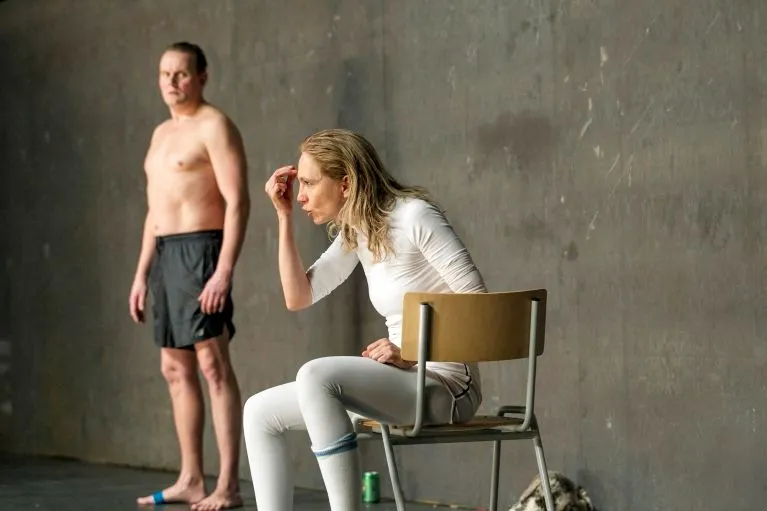
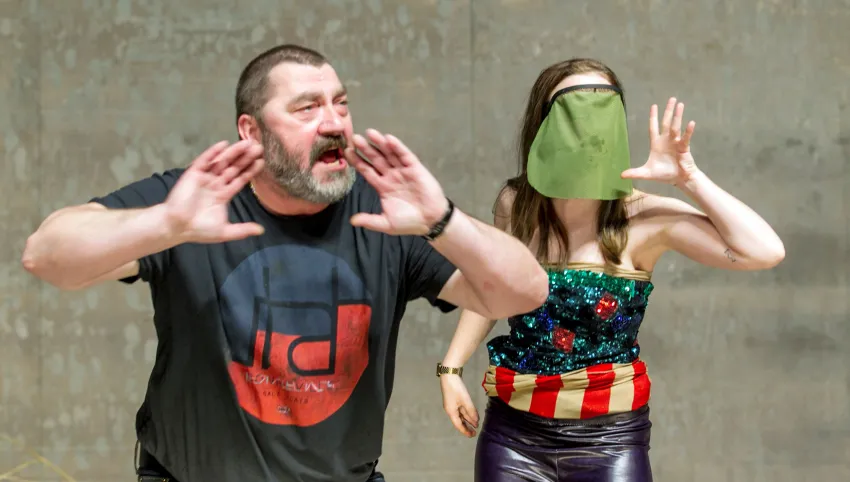
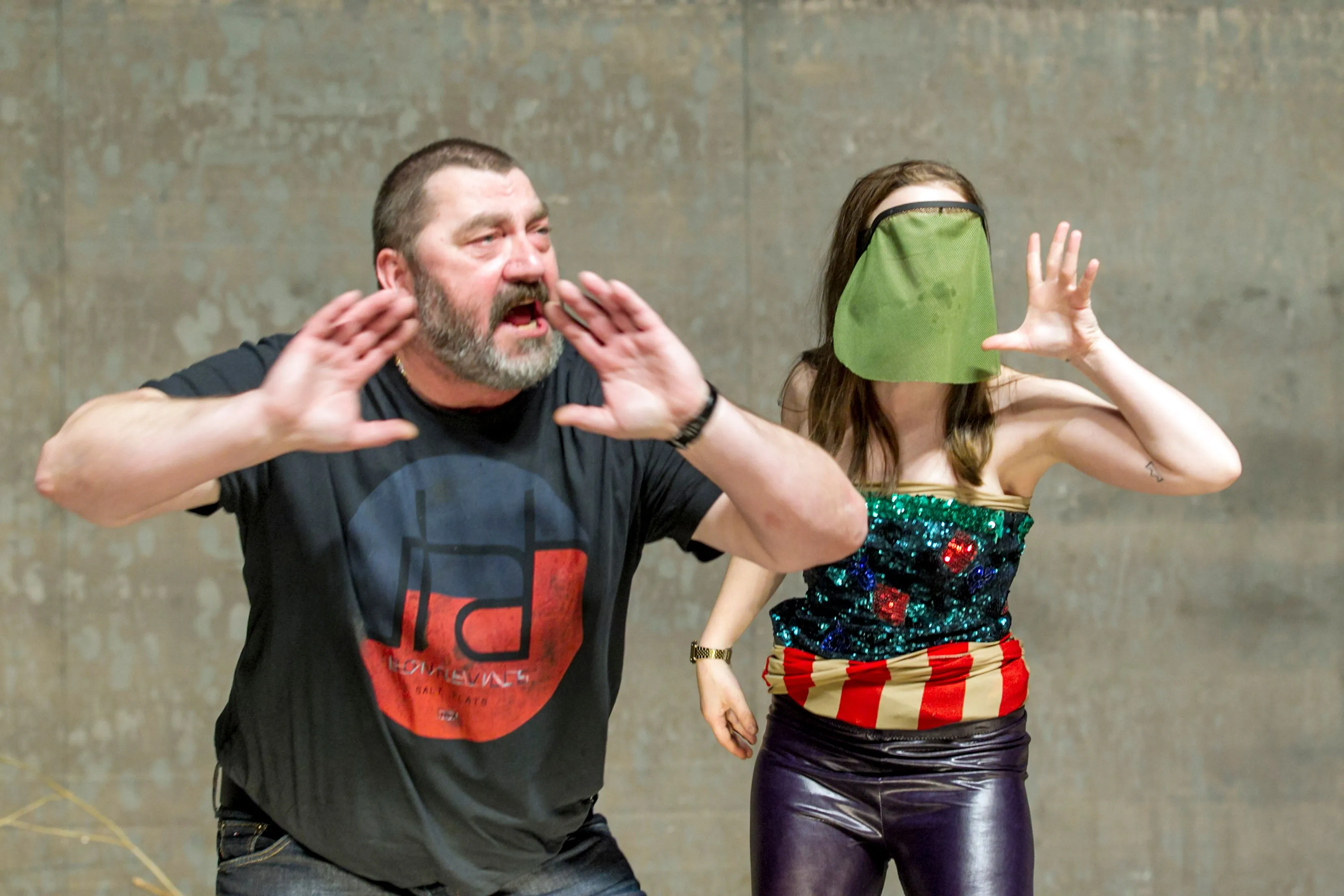
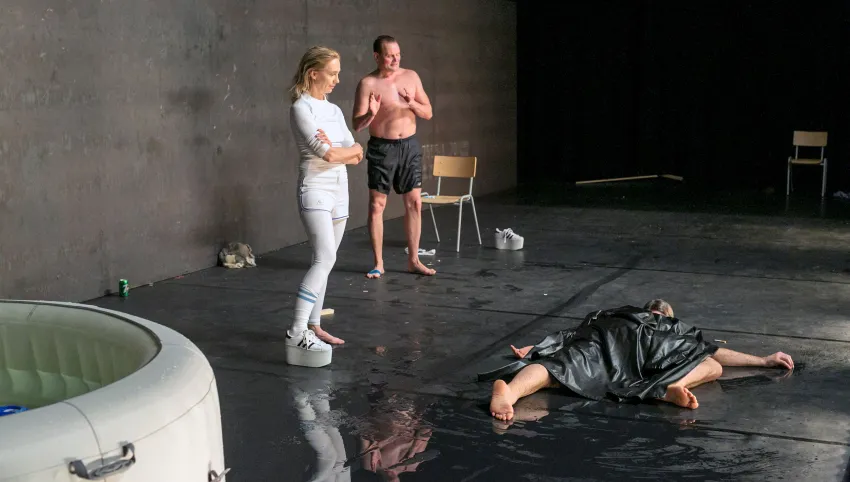
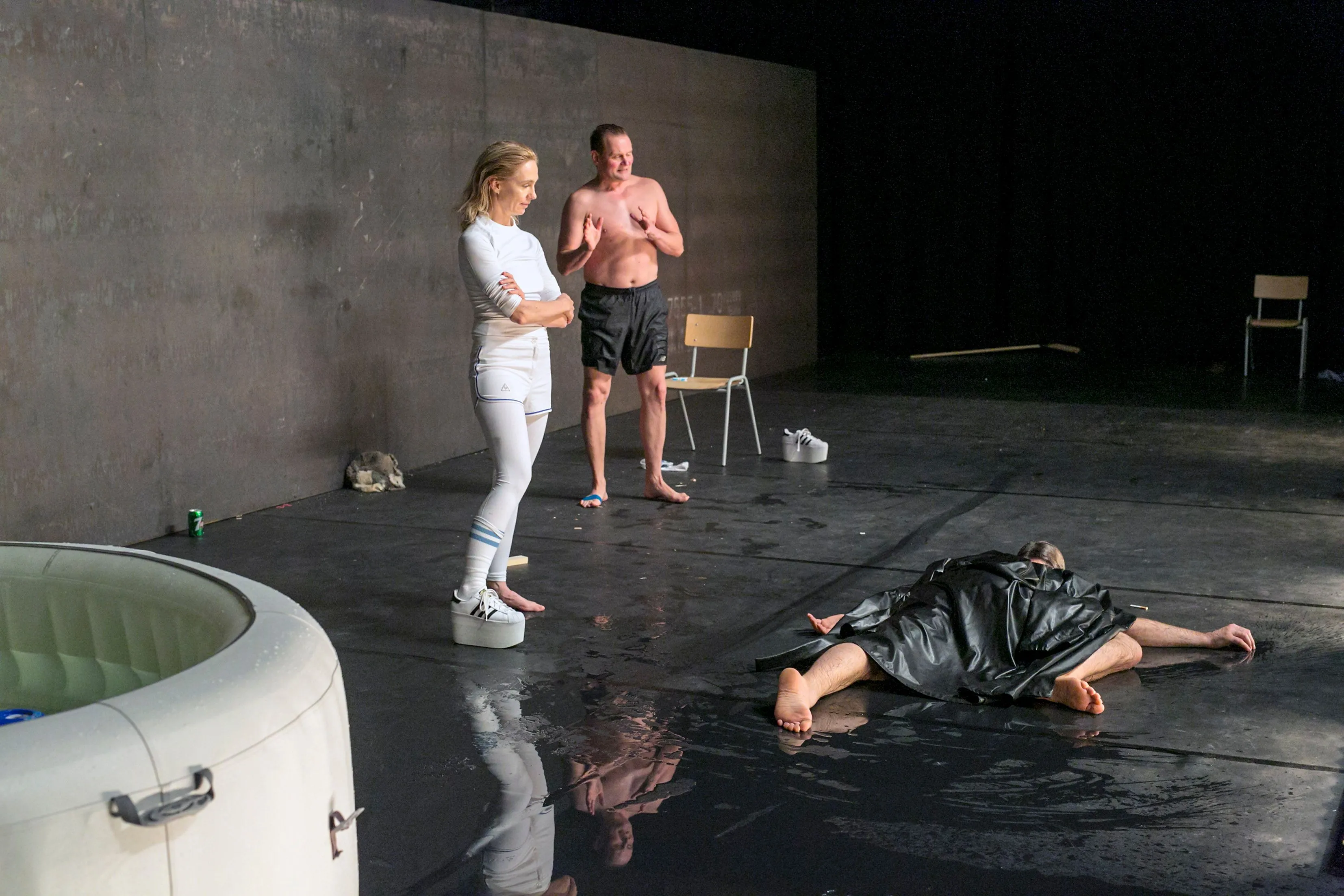
A top-class ensemble meets one of the most brilliant texts of the late 20th century at the finale of the Brecht Festival. "Infinite Jest" by David Foster Wallace sprouts a wildly rampant portrait of a dystopian, performance-oriented society of exhaustion over 1500 pages. Director Thorsten Lensing has condensed the work into a captivating evening of theater with a star-studded cast.
"Infinite Jest" is a novel of shards that does not follow a straightforward plot, but has several narrative centers that are nested within one another. The characters form a large-scale web in which life becomes entangled.
The novel was published in the USA in 1996. It can be described as an attempt to narrate the contemporary world without interpreting it uniformly. "I want to write about what it feels like to live today instead of distracting from it," is how Wallace characterized his project. This is why he writes about births and death struggles, snowstorms, love and separation stories, exaggerated salivation, beautiful nurses and birds that suffer a heart attack in mid-flight.
Wallace treats his characters with great seriousness and tremendous lightness at the same time. "Jokes", writes Wallace, "are the message in a bottle with which the desperate send out their most piercing cries for help".
Wallace treats his characters with great seriousness and tremendous lightness at the same time. "Jokes", writes Wallace, "are the message in a bottle with which the desperate send out their most piercing cries for help".
Thorsten Lensing's production centers on the three brothers of the Incandenza family: the highly gifted Hal is a dictionary prodigy and a student at the Enfield Tennis Academy. His older brother Orin plays for the Arizona Cardinals American football team. Mario, the younger brother, is severely physically disabled and a passionate radio listener and filmmaker. They are joined by other characters such as the veiled radio presenter Joelle Van Dyne, a member of the "League of the Rude and Disfigured", and the former thief and drug addict Don Gately from the Ennet House drug rehab center. All the characters face their lives without protection. Some suffer from depression, others from alcohol, sex or painkiller addiction, many are subjected to a relentless compulsion to perform.
The starting point for Lensing's work is Wallace's art, which consists of telling stories from the damaged souls without judging them, but also without portraying them as victims.
With: Jasna Fritzi Bauer, Sebastian Blomberg, André Jung, Ursina Lardi, Heiko Pinkowski and Devid Striesow
Director: Thorsten Lensing / Assistant director: Benjamin Eggers-Domsky / Stage: Gordian Blumenthal, Ramun Capaul / Costumes: Anette Guther / Text version: Thorsten Lensing / Assistant text version: Dirk Pilz, Thierry Mousset / Dramaturgy: Thierry Mousset / Production manager: Eva-Karen Tittmann / Production manager stage: Martina Schulle / Technical director: Dirk Lutz / Assistant director: Lucie Grünbeck / Costume assistant: Marie Fischer/ Make-up: Hannah Kaiser
A production by Thorsten Lensing in co-production with Schauspiel Stuttgart, Schauspielhaus Zürich, Ruhrfestspiele Recklinghausen, Sophiensaele Berlin, Kampnagel Internationale Kulturfabrik Hamburg, Theater im Pumpenhaus Münster, HELLERAU - Europäisches Zentrum der Künste, Künstlerhaus Mousonturm Frankfurt/Main and Les Théâtres de la Ville de Luxembourg. Funded by the Capital Cultural Fund Berlin and the City of Münster.
Performance rights with Rowohlt Theater Verlag, Reinbek bei Hamburg.
Location: martini-Park
Duration: 4 hours, 1 break
Tickets: 35€ >> 12€
Thorsten Lensing has been working as a director since the mid-1990s. His productions are created as independent productions. His cooperation partners include leading European production houses from Antwerp to Luxembourg, Berlin, Düsseldorf, Hamburg, Dresden, Frankfurt, Stuttgart and Zurich. He carefully selects his collaborators from a network of renowned actors. For "Karamasow", the predecessor to "Unendlicher Spaß", Thorsten Lensing received the Friedrich Luft Prize from the Berliner Morgenpost for the best Berlin or Potsdam theater performance in 2014.