

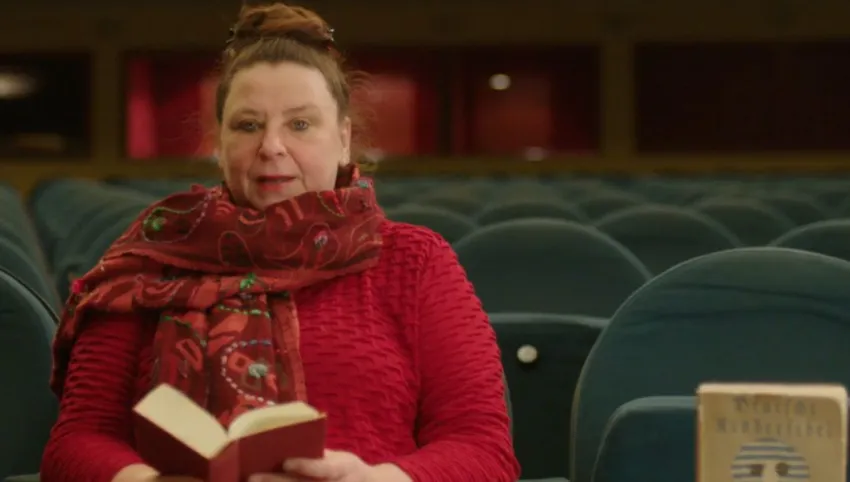
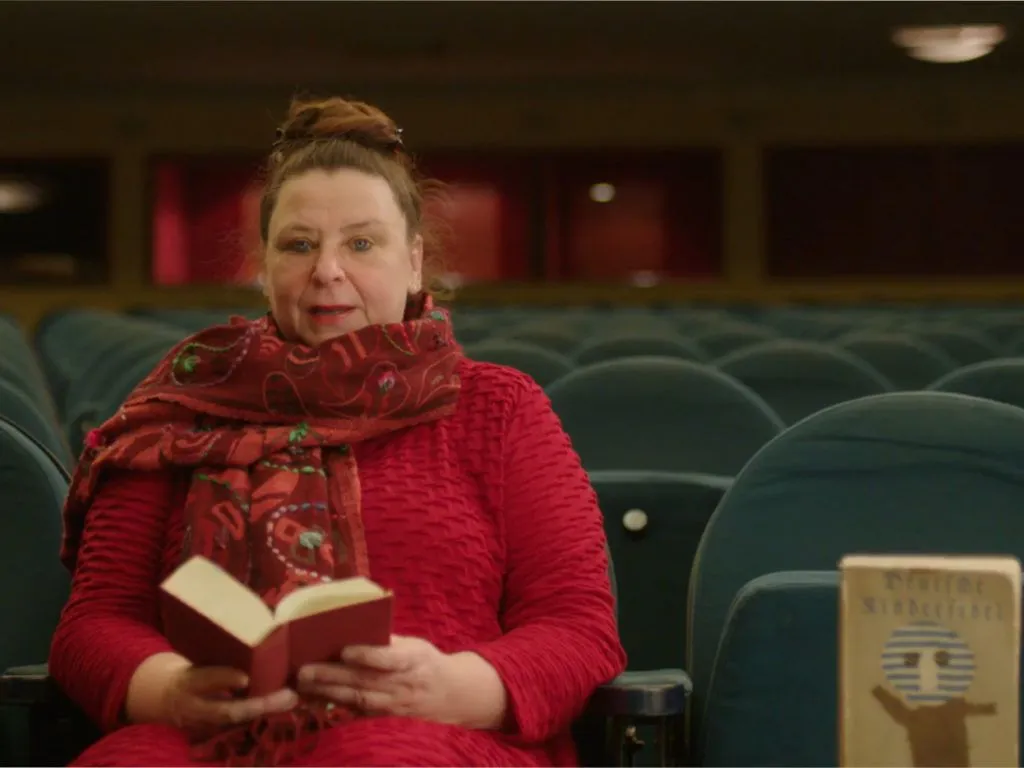

Annett Gröschner: "Ring over Ostkreut. Ruth Fischer on her way to work"
Annett Gröschner's story is both a snapshot and a journey through the life of an unconventional contemporary of Bertolt Brecht: Ruth Elfriede Fischer (1895-1961) was a philosopher, editor and politician in the ultra-left wing of the KPD. From 1914, she studied philosophy, economics, education, psychology and politics at the University of Vienna. In 1918, she co-founded the KPDÖ in Vienna and later took on a leading role in the Berlin KPD. In Prenzlauer Berg in the 1920s, she actively campaigned for reforms in social work. Kicked out of the party by Stalin in 1926 for ultra-left deviations and interned in the Hotel Lux, the Nazis were also after her from 1933. After the war, she testified before the "Committee for Un-American Activities" against her two younger brothers Gerhart and Hanns Eisler, whereupon one was imprisoned and the other deported. "Ring over Ostkreuz. Ruth Fischer on her way to work" was created as an audio contribution to an exhibition at the Museum Pankow. For the online edition of the Brecht Festival, the author is reading it for the first time for an audience.
Luise Meier: "MRX Machine"
"If the starting point is a world that tries by all means to entice us to work, MRX Machine at least wants to function as a waste of working and living time itself. Its motto is the paradox: everyone makes their contribution to the project, not to make a contribution." Luise Meier's manifesto is a secret greeting to all refuseniks and blue-collar workers, it is analysis, agitation and aggression in one - and the listeners are on sick leave for the time they are listening.
Luise Meier, born 1985 in East Berlin, works as a freelance author and service employee. She studied philosophy, social and cultural anthropology and cultural studies in Berlin, Frankfurt a. d. Oder and Aarhus. Her texts for the Berliner Volksbühne are archived at www.volksbuehne.adk.de.
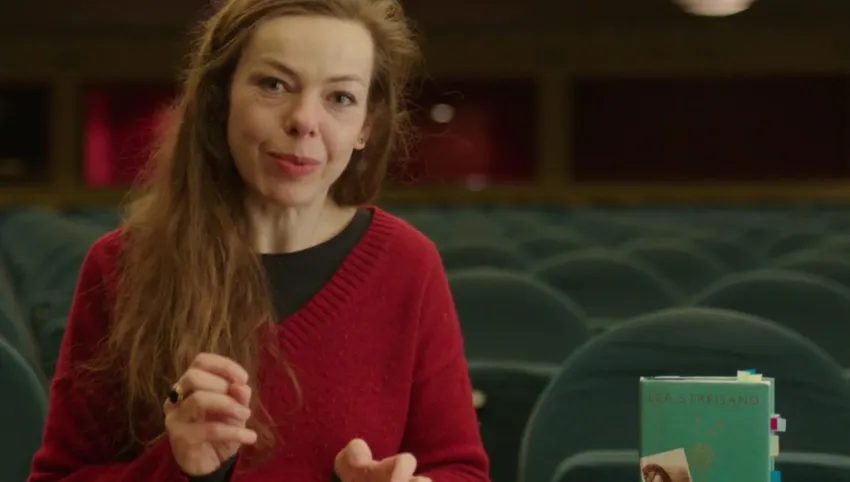
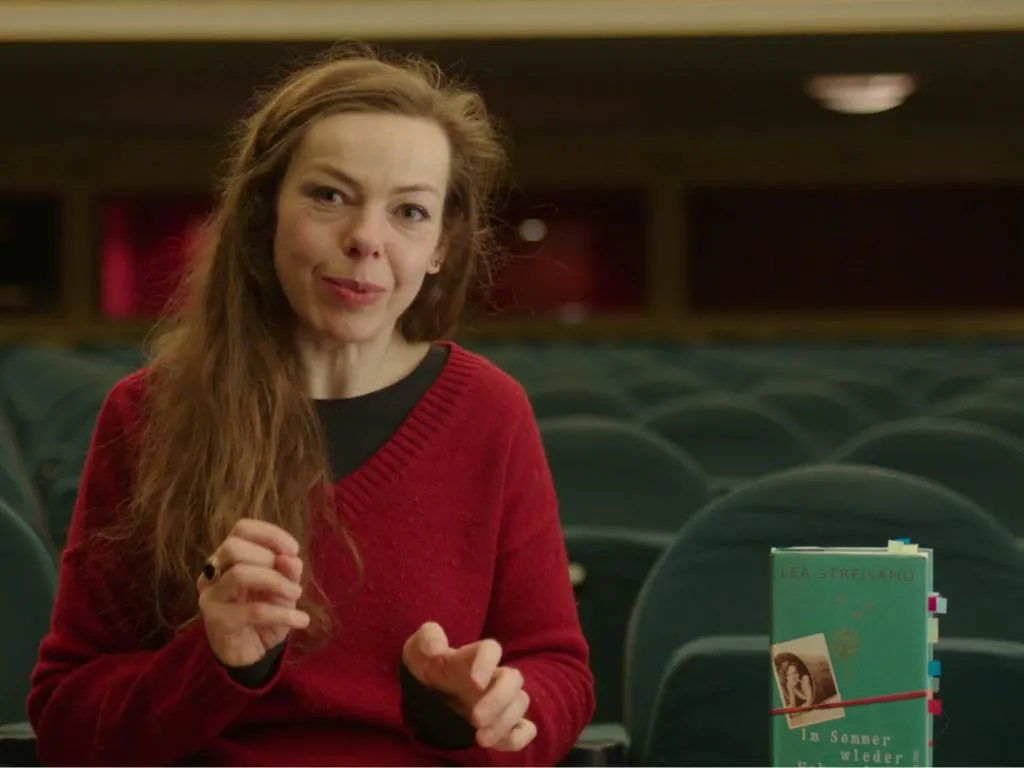
Lea Streisand: Hufeland Ecke Bötzow"
Very lively and insanely funny, "Hufeland Ecke Bötzow" describes a childhood and youth in East Berlin from the end of the 1970s to the end of the 1990s. In real existing socialism, Franzi and her friends conquer the backyards of the Bötzow district. Her parents discuss the future of the country at top-secret meetings. The Wall falls, the DM comes, the longed-for reforms become German unity. Puberty and post-socialism become one for Franzi. Lea Streisand tells the story of growing up in a time that is not very suitable for creating new certainties. Except perhaps for one: demos are a "great opportunity to get to know boys".
Lea Streisand, born in Berlin in 1979, studied Modern German Literature and Scandinavian Studies. She writes for taz and Berliner Zeitung and has a weekly radio column on Radio Eins. Her first novel "Im Sommer wieder Fahrrad" was published by Ullstein in fall 2016, and Streisand's radio columns are also available in Ullstein paperback: "War schön jewesen. Stories from the big city."
Sabine Kebir: "An acceptable man? Brecht and the women"
Monster, macho or perhaps an acceptable man after all? Why did the relationships that bound Brecht and his lovers together for so long work? Sabine Kebir's analyses do not confirm a perpetrator-victim relationship, but rather the attempt of lovers to forge their partnership from closeness and distance, equality and autonomy: an advance into new territory that demands respect instead of pity for the one or condemnation for the other. Ultimately, it comes down to the ability to overcome one's own jealousy. Sabine Kebir's interpretations pose new questions in the dispute about Brecht's partner relationships (was B.B. polygamous out of fidelity?) and provide food for thought about relationships between women and men today.
Sabine Kebir was born in Leipzig in 1949 and grew up in Berlin. 1967-1972 studied Italian, French, Russian, until 1977 worked at the Central Institute for Literary History of the Academy of Sciences in Berlin/GDR (Dr. phil.). Emigrated to Algeria in 1977. Lecturer at various universities there. 1988 Moved to West Berlin. 1989 Habilitation in political science. Since then she has worked as a publicist, literary scholar, political scientist and freelance author. Lives in BerlinPublications include: An Acceptable Man? Streit um Bertolt Brecht Partnerbeziehungen (1987, Aufbau Taschenbuch Verlag 1998); Antonio Gramsci's Zivilgesellschaft (1991); Eine Bovary aus Brandenburg (novel, 1991); Zwischen Traum und Alptraum. Algerische Erfahrungen (1993); Ich fragte nicht nach meinem Anteil. Elisabeth Hauptmann's work with Bertolt Brecht (Aufbau-Verlag 1997, Aufbau Taschenbuch Verlag 2000); Abstieg in den Ruhm. Helene Weigel. A Biography (Aufbau-Verlag 2000).
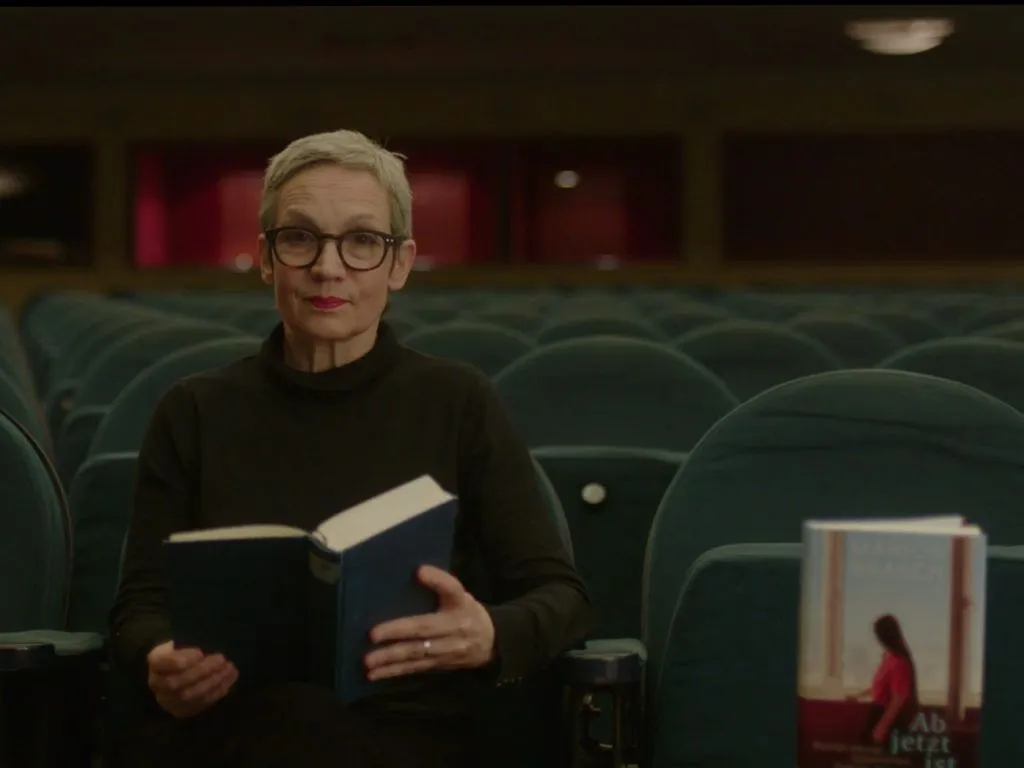
Marion Brasch: "Ab jetzt ist Ruhe - Roman meiner fabelhaften Kindheit"
Marion Brasch's compelling novel tells the story of her extraordinary family caught between East and West. The father was deputy minister of culture in the GDR, the brothers, including Thomas Brasch, became famous as writers, playwrights and actors.
With surprising ease, the "little sister" recounts the dramatic events in her family - success, revolt, loss of the three brothers - and follows her path through adventure and turmoil to her own freedom. Rarely has a family story been told as personally and movingly as in this novel.
Marion Brasch was born in Berlin in 1961. After graduating from high school, the trained typesetter worked in a print shop, for various publishing houses and for the GDR Composers' Association, and later for radio. Her novels "Ab jetzt ist Ruhe", "Wunderlich fährt nach Norden" and most recently "Lieber woanders" were published by S. Fischer.
Lea Streisand: "Bicycles again in summer"
Ellis Heiden was an actress and bon vivant, "a woman like a spice rack", funny, spirited and fearless. In the 1940s, for example, she cheated her groom, a "half-Jew", to Berlin in an adventurous action and saved his life. She also mastered the post-war turmoil, the fall of the Berlin Wall and the reunification period with a stunningly unconventional attitude to life. For the first-person narrator, "Mütterchen", her beloved grandmother, is her interlocutor and supreme authority, whose unconventional morals are astonishing and whose wisdom and "mother wit" carry her through difficult times.
Annett Gröschner's story is both a snapshot and a journey through the life of an unconventional contemporary of Bertolt Brecht: Ruth Elfriede Fischer (1895-1961) was a philosopher, editor and politician in the ultra-left wing of the KPD. From 1914, she studied philosophy, economics, education, psychology and politics at the University of Vienna. In 1918, she co-founded the KPDÖ in Vienna and later took on a leading role in the Berlin KPD. In Prenzlauer Berg in the 1920s, she actively campaigned for reforms in social work. Kicked out of the party by Stalin in 1926 for ultra-left deviations and interned in the Hotel Lux, the Nazis were also after her from 1933. After the war, she testified before the "Committee for Un-American Activities" against her two younger brothers Gerhart and Hanns Eisler, whereupon one was imprisoned and the other deported. "Ring over Ostkreuz. Ruth Fischer on her way to work" was created as an audio contribution to an exhibition at the Museum Pankow. For the online edition of the Brecht Festival, the author is reading it for the first time for an audience.
Luise Meier: "MRX Machine"
"If the starting point is a world that tries by all means to entice us to work, MRX Machine at least wants to function as a waste of working and living time itself. Its motto is the paradox: everyone makes their contribution to the project, not to make a contribution." Luise Meier's manifesto is a secret greeting to all refuseniks and blue-collar workers, it is analysis, agitation and aggression in one - and the listeners are on sick leave for the time they are listening.
Luise Meier, born 1985 in East Berlin, works as a freelance author and service employee. She studied philosophy, social and cultural anthropology and cultural studies in Berlin, Frankfurt a. d. Oder and Aarhus. Her texts for the Berliner Volksbühne are archived at www.volksbuehne.adk.de.
Lea Streisand: Hufeland Ecke Bötzow"
Very lively and insanely funny, "Hufeland Ecke Bötzow" describes a childhood and youth in East Berlin from the end of the 1970s to the end of the 1990s. In real existing socialism, Franzi and her friends conquer the backyards of the Bötzow district. Her parents discuss the future of the country at top-secret meetings. The Wall falls, the DM comes, the longed-for reforms become German unity. Puberty and post-socialism become one for Franzi. Lea Streisand tells the story of growing up in a time that is not very suitable for creating new certainties. Except perhaps for one: demos are a "great opportunity to get to know boys".
Lea Streisand, born in Berlin in 1979, studied Modern German Literature and Scandinavian Studies. She writes for taz and Berliner Zeitung and has a weekly radio column on Radio Eins. Her first novel "Im Sommer wieder Fahrrad" was published by Ullstein in fall 2016, and Streisand's radio columns are also available in Ullstein paperback: "War schön jewesen. Stories from the big city."
Sabine Kebir: "An acceptable man? Brecht and the women"
Monster, macho or perhaps an acceptable man after all? Why did the relationships that bound Brecht and his lovers together for so long work? Sabine Kebir's analyses do not confirm a perpetrator-victim relationship, but rather the attempt of lovers to forge their partnership from closeness and distance, equality and autonomy: an advance into new territory that demands respect instead of pity for the one or condemnation for the other. Ultimately, it comes down to the ability to overcome one's own jealousy. Sabine Kebir's interpretations pose new questions in the dispute about Brecht's partner relationships (was B.B. polygamous out of fidelity?) and provide food for thought about relationships between women and men today.
Sabine Kebir was born in Leipzig in 1949 and grew up in Berlin. 1967-1972 studied Italian, French, Russian, until 1977 worked at the Central Institute for Literary History of the Academy of Sciences in Berlin/GDR (Dr. phil.). Emigrated to Algeria in 1977. Lecturer at various universities there. 1988 Moved to West Berlin. 1989 Habilitation in political science. Since then she has worked as a publicist, literary scholar, political scientist and freelance author. Lives in BerlinPublications include: An Acceptable Man? Streit um Bertolt Brecht Partnerbeziehungen (1987, Aufbau Taschenbuch Verlag 1998); Antonio Gramsci's Zivilgesellschaft (1991); Eine Bovary aus Brandenburg (novel, 1991); Zwischen Traum und Alptraum. Algerische Erfahrungen (1993); Ich fragte nicht nach meinem Anteil. Elisabeth Hauptmann's work with Bertolt Brecht (Aufbau-Verlag 1997, Aufbau Taschenbuch Verlag 2000); Abstieg in den Ruhm. Helene Weigel. A Biography (Aufbau-Verlag 2000).
Marion Brasch: "Ab jetzt ist Ruhe - Roman meiner fabelhaften Kindheit"
Marion Brasch's compelling novel tells the story of her extraordinary family caught between East and West. The father was deputy minister of culture in the GDR, the brothers, including Thomas Brasch, became famous as writers, playwrights and actors.
With surprising ease, the "little sister" recounts the dramatic events in her family - success, revolt, loss of the three brothers - and follows her path through adventure and turmoil to her own freedom. Rarely has a family story been told as personally and movingly as in this novel.
Marion Brasch was born in Berlin in 1961. After graduating from high school, the trained typesetter worked in a print shop, for various publishing houses and for the GDR Composers' Association, and later for radio. Her novels "Ab jetzt ist Ruhe", "Wunderlich fährt nach Norden" and most recently "Lieber woanders" were published by S. Fischer.
Lea Streisand: "Bicycles again in summer"
Ellis Heiden was an actress and bon vivant, "a woman like a spice rack", funny, spirited and fearless. In the 1940s, for example, she cheated her groom, a "half-Jew", to Berlin in an adventurous action and saved his life. She also mastered the post-war turmoil, the fall of the Berlin Wall and the reunification period with a stunningly unconventional attitude to life. For the first-person narrator, "Mütterchen", her beloved grandmother, is her interlocutor and supreme authority, whose unconventional morals are astonishing and whose wisdom and "mother wit" carry her through difficult times.
Hannah Dörr
Authors